
BACK PAIN · CRANBERRY TOWNSHIP, PA
Sciatica Relief
Without Surgery
What sciatica actually is, why it’s often misdiagnosed, and how chiropractic care addresses the nerve compression at the source..
Sciatica is compression or irritation of the sciatic nerve — producing pain, numbness, or weakness that radiates from the lower back through the hip and down the leg. At Zock Family Chiropractic in Cranberry Township, PA, Dr. Zock and Dr. Lauren treat sciatica by addressing the spinal cause of nerve compression, not just the symptoms.
By Dr. Kerstin Zock, DC · May 2026
What sciatica actually is
Most patients who come in describing sciatica have been dealing with it for weeks or months before seeking care. They describe the pain as shooting, burning, or electric — and it typically follows a predictable path down one side of the body. Some notice it most when sitting. Others find it worse with certain movements or first thing in the morning.
True sciatica — nerve root compression at L4, L5, or S1 — is sometimes confused with piriformis syndrome, sacroiliac joint dysfunction, or referred pain from a tight hip flexor. The distinction matters because the treatment approach differs for each.
Why most sciatica comes from the spine
When a nerve root at L4, L5, or S1 is compressed — most commonly by a herniated disc or a narrowed foramen — the nerve sends pain signals along its entire length. That is why sciatic pain can be felt in the calf or foot when the actual problem is in the lower back.
This is also why treating the symptom — stretching the leg, applying heat to the hip — provides only temporary relief. The compression point in the spine continues to irritate the nerve. Chiropractic care works by addressing the structural cause: restoring normal movement to the involved spinal segments and reducing disc pressure so the compressed nerve root can recover.
How chiropractic treats sciatica
Treatment for sciatica at Zock Family Chiropractic begins with an evaluation to confirm the level and cause of nerve compression. Dr. Zock or Dr. Lauren will assess your movement, sensation, and pain pattern before any treatment is performed.
- Spinal adjustment to restore mobility to restricted lumbar segments
- Soft tissue work to reduce muscle guarding around the affected area
- Targeted care for the specific vertebral level causing compression
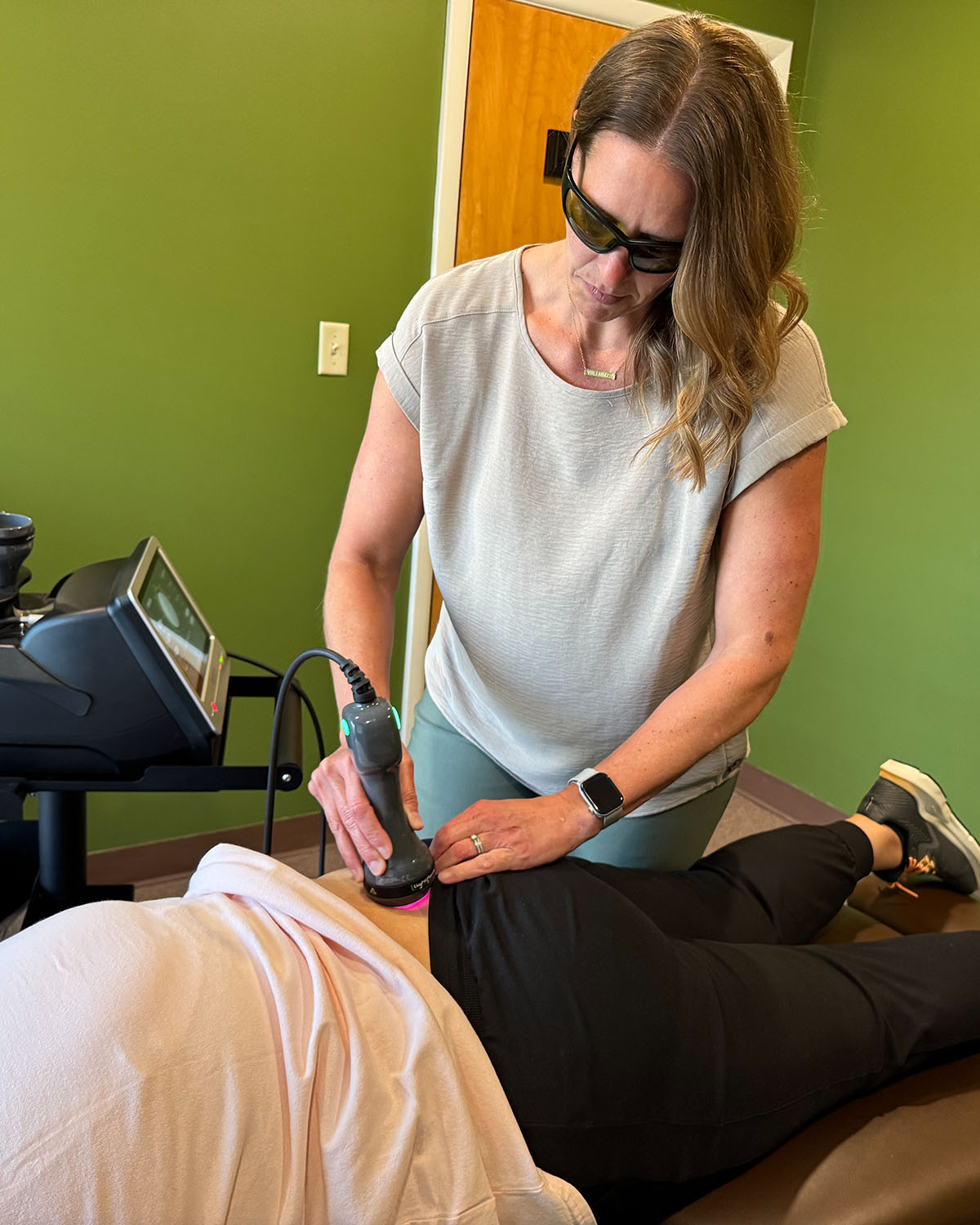
- Laser therapy when inflammation around the disc or nerve root is significant
- Guidance on positions and movements that reduce nerve irritation between visits
Most patients with acute sciatica notice meaningful improvement within four to six visits. Chronic sciatica or cases involving significant disc herniation may take longer. If imaging is recommended before treatment begins, that will be discussed at your evaluation.
Back pain slowing you down?
Dr. Zock evaluates what's actually driving your back pain — and builds a plan around your specific situation. No program commitments. New patients welcome.
REQUEST APPOINTMENTRelated Articles
Back Pain Treatment Hub Why Pain increases with weight loss Cold Weather and Back Pain Standing Desks and Low Back PainAbout Dr. Kerstin Zock
Founder of Zock Family Chiropractic. Practicing in Cranberry Township since 2012. Webster Technique certified. Treats patients of all ages.
VIEW FULL PROFILEYOUR FIRST VISIT
What to expect at your sciatica evaluation
No referral, no imaging required to get started. Most initial visits are 30 to 45 minutes. You will know the cause of your sciatica and the treatment plan before anything is done.
WHY IT MATTERS
Why sciatica needs to be treated at the source
Treating the leg pain without addressing the spinal cause is why most sciatica patients cycle through temporary relief without lasting resolution.